Lady Macbeth 🔒 Members
Shakespeare. From Macbeth, William Shakespeare (died 1616). Macbeth's wife who steels her husband to murder Duncan and descends into madness haunted by guilt.
Age and build
The book is silent here, so we keep this plain and neutral.
Face and hair
The book is silent here, so we keep this plain and neutral.
Dress
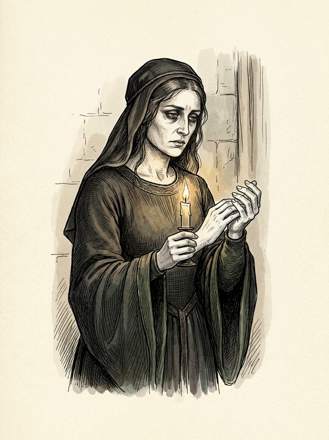
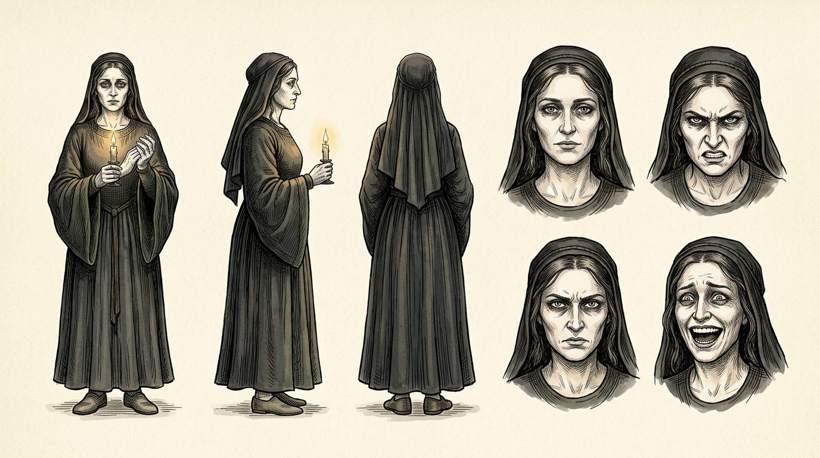
carries a taper when sleepwalking
“Enter Lady Macbeth with a taper” (Macbeth, part 21)
Voice and speech
commanding and persuasive tone
“But screw your courage to the sticking-place, And we’ll not fail” (Macbeth, part 7)
shifts to fragmented, obsessive speech when mad
“Out, damned spot! out, I say! One; two” (Macbeth, part 21)
Signature words
spot or stain, obsessive reference
“Yet here’s a spot” (Macbeth, part 21)
done, repeated mantra
“What’s done cannot be undone” (Macbeth, part 21)
fear, dismissive of it
“What need we fear who knows it, when none can call our power to account” (Macbeth, part 21)
water, cleansing imagery
“A little water clears us of this deed: How easy is it then” (Macbeth, part 9)
Gait and mannerisms
takes daggers from Macbeth's hands with decisive action
“Infirm of purpose! Give me the daggers” (Macbeth, part 9)
performs elaborate social courtesy as queen
“Pronounce it for me, sir, to all our friends; For my heart speaks they are welcome” (Macbeth, part 15)
obsessively scrubs hands while sleepwalking
“What, will these hands ne’er be clean” (Macbeth, part 21)
Strengths
ruthless determination and strategic planning
“you shall put This night’s great business into my dispatch; Which shall to all our nights and days to come Give solely sovereign sway and masterdom” (Macbeth, part 5)
ability to manipulate and shame Macbeth into action
“When you durst do it, then you were a man; And, to be more than what you were, you would Be so much more the man” (Macbeth, part 7)
composure and quick thinking after the murder
“Go get some water, And wash this filthy witness from your hand.— Why did you bring these daggers from the place” (Macbeth, part 9)
social grace and diplomatic skill as queen
“My royal lord, You do not give the cheer: the feast is sold That is not often vouch’d, while ’tis a-making, ’Tis given with welcome” (Macbeth, part 15)
Flaws
conscience and maternal feeling despite her cruelty
“Had he not resembled My father as he slept, I had done’t” (Macbeth, part 9)
guilt manifests as obsessive madness
“Here’s the smell of the blood still: all the perfumes of Arabia will not sweeten this little hand” (Macbeth, part 21)
inability to suppress conscience despite initial resolve
“My hands are of your color, but I shame To wear a heart so white” (Macbeth, part 9)
Traits
ambitious and power-hungry
“my dearest partner of greatness” (Macbeth, part 5)
manipulative and controlling
“To beguile the time, Look like the time; bear welcome in your eye, Your hand, your tongue: look like the innocent flower, But be the serpent under’t” (Macbeth, part 5)
initially dismissive of conscience and guilt
“The sleeping and the dead Are but as pictures. ’Tis the eye of childhood That fears a painted devil” (Macbeth, part 9)
ultimately consumed by remorse and madness
“These deeds must not be thought After these ways; so, it will make us mad” (Macbeth, part 9)
Lines in their own words
reading Macbeth's letter, sharing the witches' prophecy
“This have I thought good to deliver thee (my dearest partner of greatness) that thou might’st not lose the dues of rejoicing, by being ignorant of what greatness is promis’d thee” (Macbeth, part 5)
shaming Macbeth into committing murder
“I have given suck, and know How tender ’tis to love the babe that milks me: I would, while it was smiling in my face, Have pluck’d my nipple from his boneless gums And dash’d the brains out, had I so sworn as you Have done to this” (Macbeth, part 7)
taking control after the murder
“Infirm of purpose! Give me the daggers. The sleeping and the dead Are but as pictures” (Macbeth, part 9)
sleepwalking, obsessed with blood
“Out, damned spot! out, I say! One; two. Why, then ’tis time to do’t” (Macbeth, part 21)
final plea to Macbeth in madness
“What’s done cannot be undone. To bed, to bed, to bed” (Macbeth, part 21)
Reference sheet
Film looks we will not copy
- Any named actress's look from stage or film
- Sargent's 1889 portrait of Ellen Terry in the beetle wing dress
- Modern film costume designs
Always book accurate. Every quote above was checked word for word against our stored copy of the text. Pictures are made with AI from the book's own description and checked by hand for film looks.