Lady Catherine de Bourgh 🔒 Members
Romance and manners. From Pride and Prejudice, Jane Austen (1813). Lady Catherine de Bourgh is a wealthy, imperious widow of high rank who exercises control over her dependents through patronage and expects absolute deference to her authority.
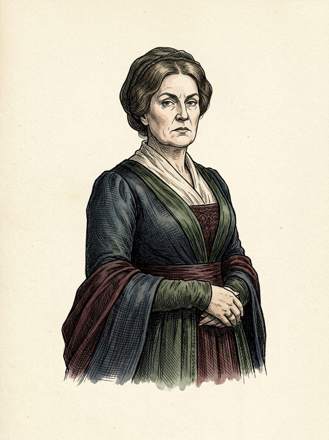
Age and build
tall and large in stature
“Lady Catherine was a tall, large woman, with strongly-marked features, which might once have been handsome” (Pride And Prejudice, part 29)
Face and hair
strongly marked features, formerly handsome
“Lady Catherine was a tall, large woman, with strongly-marked features, which might once have been handsome” (Pride And Prejudice, part 29)
Dress
The book is silent here, so we keep this plain and neutral.
Voice and speech
authoritative tone marking self-importance
“whatever she said was spoken in so authoritative a tone as marked her self-importance” (Pride And Prejudice, part 29)
speaks without intermission and delivers opinions decisively
“there was little to be done but to hear Lady Catherine talk, which she did without any intermission till coffee came in, delivering her opinion on every subject in so decisive a manner as proved that she was not used to have her judgment controverted” (Pride And Prejudice, part 29)
Signature words
frequently uses 'I' and speaks of her own actions and preferences
“I always say that nothing is to be done in education without steady and regular instruction” (Pride And Prejudice, part 29)
employs 'must' to issue commands
“You must send John with the young ladies, Mrs. Collins” (Pride And Prejudice, part 37)
Gait and mannerisms
rises with great condescension to receive visitors
“Her Ladyship, with great condescension, arose to receive them” (Pride And Prejudice, part 29)
calls out to interrupt conversations
“she did not scruple to call out” (Pride And Prejudice, part 31)
Strengths
exercises considerable patronage and influence
“It is wonderful how many families I have been the means of supplying in that way” (Pride And Prejudice, part 29)
attentive to matters of propriety and rank
“I am excessively attentive to all those things” (Pride And Prejudice, part 37)
Flaws
arrogant and conceited, not used to contradiction
“she was not used to have her judgment controverted” (Pride And Prejudice, part 29)
impertinent in questioning others about private matters
“Elizabeth felt all the impertinence of her questions” (Pride And Prejudice, part 29)
becomes highly incensed when thwarted
“Her Ladyship was highly incensed” (Pride And Prejudice, part 56)
extremely angry and abusive when her will is crossed
“Lady Catherine was extremely indignant on the marriage of her nephew; and as she gave way to all the genuine frankness of her character, in her reply to the letter which announced its arrangement, she sent him language so very abusive, especially of Elizabeth” (Pride And Prejudice, part 61)
Traits
proud and conscious of rank
“Lady Catherine was reckoned proud by many people” (Pride And Prejudice, part 14)
dictatorial in managing others' affairs
“Elizabeth found that nothing was beneath this great lady’s attention which could furnish her with an occasion for dictating to others” (Pride And Prejudice, part 29)
expects and demands deference
“Her air was not conciliating, nor was her manner of receiving them such as to make her visitors forget their inferior rank” (Pride And Prejudice, part 29)
Lines in their own words
instructing on education
“I always say that nothing is to be done in education without steady and regular instruction, and nobody but a governess can give it” (Pride And Prejudice, part 29)
commanding obedience regarding propriety
“You must send John with the young ladies, Mrs. Collins. I am glad it occurred to me to mention it; for it would really be discreditable to you to let them go alone” (Pride And Prejudice, part 37)
asserting her patronage and generosity
“thanks to Lady Catherine de Bourgh, I am removed far beyond the necessity of regarding little matters” (Pride And Prejudice, part 16)
expressing displeasure at being contradicted
“I am not to be intimidated into anything so wholly unreasonable” (Pride And Prejudice, part 56)
dismissing Elizabeth's objections
“You have widely mistaken my character, if you think I can be worked on by such persuasions as these” (Pride And Prejudice, part 56)
Reference sheet
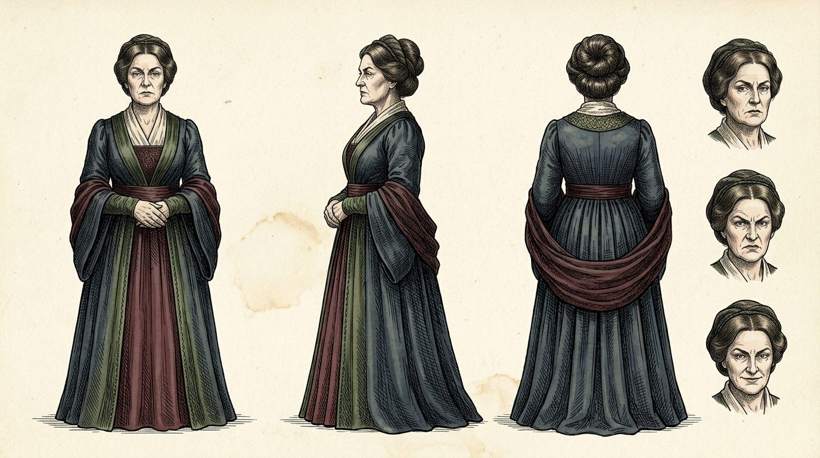
Film looks we will not copy
- Judi Dench 2005 film look
- Barbara Leigh-Hunt 1995 BBC look
- Edna May Oliver 1940 film look
Always book accurate. Every quote above was checked word for word against our stored copy of the text. Pictures are made with AI from the book's own description and checked by hand for film looks.