Caliban 🔒 Members
Shakespeare. From The Tempest, William Shakespeare (died 1616). Caliban is the enslaved son of the witch Sycorax, forced to serve Prospero on an island that he claims as his birthright.
Care note: S: colonial and race themes. Draw with care.
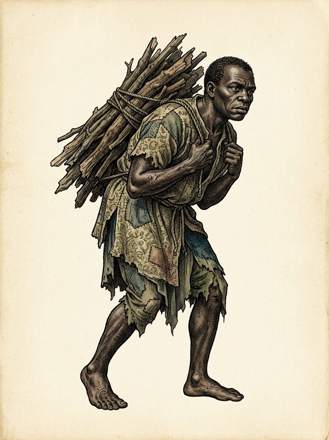
Age and build
Referred to as a thing or beast rather than a man
“Dull thing, I say so; he, that Caliban, Whom now I keep in service” (The Tempest, part 2)
Face and hair
The book is silent here, so we keep this plain and neutral.
Dress
Wears stolen apparel at the play's end
“Re-enter Ariel driving in Caliban, Stephano and Trinculo in their stolen apparel” (The Tempest, part 9)
Voice and speech
Speaks in curses and complaints, often addressing torment
“As wicked dew as e’er my mother brush’d With raven’s feather from unwholesome fen Drop on you both” (The Tempest, part 2)
Uses exclamations of pain and fear
“Do not torment me: O” (The Tempest, part 4)
Signature words
Torment
“Do not torment me, prithee; I’ll bring my wood home faster” (The Tempest, part 4)
Freedom
“Freedom, high-day! high-day, freedom! freedom, high-day, freedom” (The Tempest, part 4)
Lord or master
“I’ll swear upon that bottle to be thy true subject, for the liquor is not earthly” (The Tempest, part 4)
Prithee
“I prithee, let me bring thee where crabs grow; And I with my long nails will dig thee pig-nuts” (The Tempest, part 4)
Gait and mannerisms
Carries wood as a burden and labours for Prospero
“Enter Caliban with a burden of wood” (The Tempest, part 4)
Trembles with fear of spirits
“Thou dost me yet but little hurt; thou wilt anon, I know it by thy trembling: now Prosper works upon thee” (The Tempest, part 4)
Kneels and offers to kiss feet in submission
“I’ll show thee every fertile inch o’ the island; and I will kiss thy foot” (The Tempest, part 4)
Strengths
Knows the island intimately and can provide sustenance
“I’ll show thee the best springs; I’ll pluck thee berries; I’ll fish for thee, and get thee wood enough” (The Tempest, part 4)
Capable of strategic thinking and plotting
“Having first seiz’d his books; or with a log Batter his skull, or paunch him with a stake, Or cut his wezand with thy knife” (The Tempest, part 6)
Recognises beauty and nobility
“But she as far surpasseth Sycorax As great’st does least” (The Tempest, part 6)
Flaws
Easily deceived by alcohol and false gods
“That’s a brave god, and bears celestial liquor. I will kneel to him” (The Tempest, part 4)
Prone to violent rage and cursing
“You taught me language, and my profit on ’t Is, I know how to curse” (The Tempest, part 2)
Susceptible to distraction from his goals
“The dropsy drown this fool! What do you mean To dote thus on such luggage” (The Tempest, part 8)
Foolishly worships the wrong masters
“What a thrice-double ass Was I, to take this drunkard for a god, And worship this dull fool” (The Tempest, part 9)
Traits
Resentful of enslavement and dispossession
“This island’s mine, by Sycorax my mother, Which thou tak’st from me” (The Tempest, part 2)
Capable of wonder and poetic feeling
“Be not afeard. The isle is full of noises, Sounds, and sweet airs, that give delight, and hurt not” (The Tempest, part 6)
Obedient to those he perceives as powerful
“I must obey. His art is of such power, It would control my dam’s god, Setebos, And make a vassal of him” (The Tempest, part 2)
Capable of remorse and self-awareness
“I shall be pinch’d to death” (The Tempest, part 9)
Lines in their own words
Cursing Prospero
“All the infections that the sun sucks up From bogs, fens, flats, on Prosper fall, and make him By inch-meal a disease” (The Tempest, part 4)
Pledging allegiance to Stephano
“I’ll show thee every fertile inch o’ the island; and I will kiss thy foot. I prithee, be my god” (The Tempest, part 4)
Celebrating freedom
“No more dams I’ll make for fish; Nor fetch in firing At requiring, Nor scrape trenchering, nor wash dish; ’Ban ’Ban, Cacaliban, Has a new master—Get a new man. Freedom, high-day! high-day, freedom” (The Tempest, part 4)
Expressing wonder at the island
“The isle is full of noises, Sounds, and sweet airs, that give delight, and hurt not. Sometimes a thousand twangling instruments Will hum about mine ears” (The Tempest, part 6)
Admitting his folly
“What a thrice-double ass Was I, to take this drunkard for a god, And worship this dull fool” (The Tempest, part 9)
Seeking forgiveness
“I’ll be wise hereafter, And seek for grace” (The Tempest, part 9)
Reference sheet
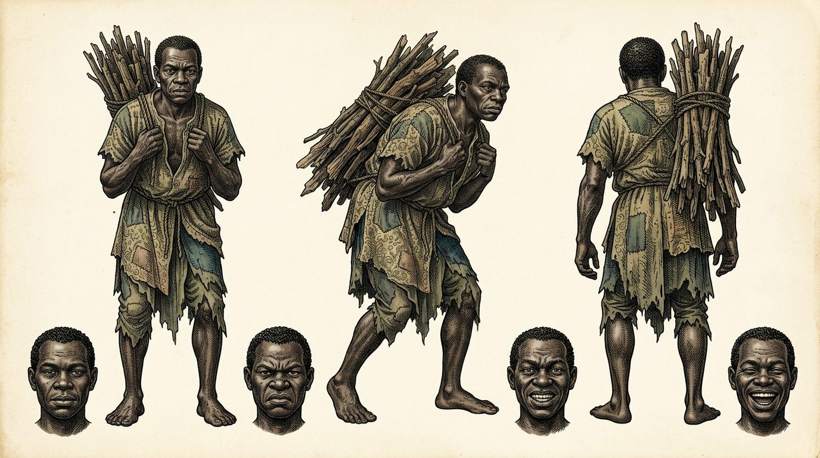
Film looks we will not copy
- Djimon Hounsou 2010 film look
- Any racial caricature
Always book accurate. Every quote above was checked word for word against our stored copy of the text. Pictures are made with AI from the book's own description and checked by hand for film looks.