Achilles 🔒 Members
Gods and heroes. From The Iliad, Homer, Samuel Butler translation (1898). The greatest warrior of the Achaeans, son of Peleus and the goddess Thetis, whose rage at Agamemnon and grief for Patroclus drive the final acts of the Trojan War.
Care note: Text: Samuel Butler died 1902. Homer is ancient.
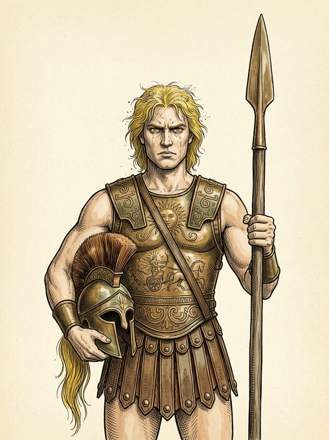
Age and build
Described as huge and mighty
“huge and mighty warrior though you be” (Iliad Butler, part 17)
Godlike in appearance and strength
“resplendent as the sun-god Hyperion” (Iliad Butler, part 16)
Face and hair
Yellow hair visible to gods
“seized the son of Peleus by his yellow hair, visible to him alone” (Iliad Butler, part 1)
Eyes gleam with fierce light when roused
“his eyes gleamed with a fierce light, for he was glad when he handled the splendid present” (Iliad Butler, part 15)
Comely face that can be disfigured by grief
“filled both hands with dust from off the ground, and poured it over his head, disfiguring his comely face” (Iliad Butler, part 14)
Dress
Wears divine armour made by Vulcan
“full of fury against the Trojans, did he don the gift of the god, the armour that Vulcan had made him” (Iliad Butler, part 15)
Armour gleams like a star as he moves
“even so did Achilles’ armour gleam on his breast as he sped onwards” (Iliad Butler, part 17)
Wears a fair and new shirt
“letting the refuse settle over his shirt so fair and new” (Iliad Butler, part 14)
Voice and speech
Uses elaborate oaths and formal speech
“nay, by this my sceptre which shalt sprout neither leaf nor shoot, nor bud anew from the day on which it left its parent stem upon the mountains” (Iliad Butler, part 1)
Signature words
Frequently invokes Jove/Zeus
“Father Jove, of a truth you blind men’s eyes and bane them” (Iliad Butler, part 15)
Speaks of glory and honour repeatedly
“I will win fame, and will bid Trojan and Dardanian women wring tears from their tender cheeks” (Iliad Butler, part 14)
References his doom and fate often
“The day will come, either at dawn or dark, or at the noontide, when one shall take my life also in battle” (Iliad Butler, part 16)
Speaks of his comrade Patroclus with deep emotion
“I would die here and now, in that I could not save my comrade” (Iliad Butler, part 14)
Gait and mannerisms
Moves with tremendous speed and force
“even so fast and furiously did the limbs of Achilles bear him onwards” (Iliad Butler, part 17)
Gnashes teeth in fury when arming
“he gnashed his teeth, his eyes gleamed like fire, for his grief was greater than he could bear” (Iliad Butler, part 15)
Pours dust over his head in grief
“filled both hands with dust from off the ground, and poured it over his head, disfiguring his comely face” (Iliad Butler, part 14)
Springs forward like a lion
“the son of Peleus sprang like a lion through the door of his house” (Iliad Butler, part 19)
Strengths
Unmatched warrior strength and skill
“I, who in fight have no peer among the Achaeans, though in council there are better than I” (Iliad Butler, part 14)
Can wield his father's spear alone
“a spear so great and heavy and strong that none of the Achaeans save only Achilles had strength to wield it” (Iliad Butler, part 16)
Moves with divine speed
“fleet son of Peleus” (Iliad Butler, part 17)
Flaws
Consumed by rage and anger
“his heart within his shaggy breast was divided whether to draw his sword, push the others aside, and kill the son of Atreus” (Iliad Butler, part 1)
Refuses to fight despite Achaean need
“Achilles, so valiant though he be, cares not and knows no ruth” (Iliad Butler, part 9)
Shows no mercy to suppliants
“the man was in no mood for pity or forbearance but was in grim earnest” (Iliad Butler, part 16)
Becomes merciless after Patroclus's death
“Until Patroclus fell I preferred to give the Trojans quarter, and sold beyond the sea many of those whom I had taken alive; but now not a man shall live” (Iliad Butler, part 16)
Traits
Deeply devoted to his companion Patroclus
“A dark cloud of grief fell upon Achilles as he listened” (Iliad Butler, part 14)
Accepts his own doom with stoicism
“I well know that I am to fall here, far from my dear father and mother; none the more, however, shall I stay my hand” (Iliad Butler, part 16)
Capable of compassion despite his rage
“the heart of Achilles yearned as he bethought him of his father” (Iliad Butler, part 19)
Struggles against his own anger
“Therefore, perish strife both from among gods and men, and anger, wherein even a righteous man will harden his heart” (Iliad Butler, part 14)
Lines in their own words
Defiant challenge to Agamemnon
“Let me tell you—and it shall surely be—he shall pay for this insolence with his life” (Iliad Butler, part 1)
Bitter accusation of cowardice
“You devour your people, for you are king over a feeble folk; otherwise, son of Atreus, henceforward you would insult no man” (Iliad Butler, part 1)
Grief-stricken lament for Patroclus
“Alas! vain were the words with which I cheered the hero Menoetius in his own house” (Iliad Butler, part 15)
Acceptance of fate while pursuing vengeance
“I will pursue Hector who has slain him whom I loved so dearly, and will then abide my doom when it may please Jove and the other gods to send it” (Iliad Butler, part 14)
Compassion shown to Priam
“Unhappy man, you have indeed been greatly daring; how could you venture to come alone to the ships of the Achaeans” (Iliad Butler, part 19)
Reference sheet
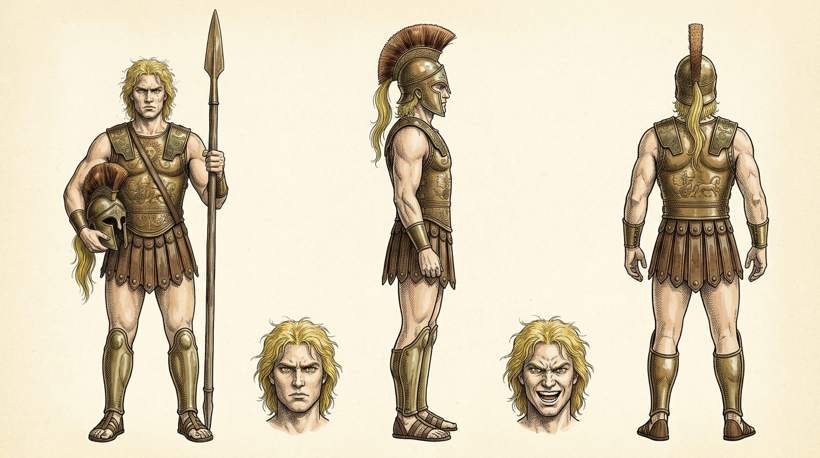
Film looks we will not copy
- Brad Pitt 2004 Troy film look
- Roman legionary armour
- Video game or comic hero styling
- Muscle poster poses
Always book accurate. Every quote above was checked word for word against our stored copy of the text. Pictures are made with AI from the book's own description and checked by hand for film looks.